Buying online has become normal for many of us.
Amazon, eBay, and similar platforms make it easy to search, compare, order, and ship products.
But one thing that is easy to overlook is this:
The platform you are buying on is not always the actual seller.
Most major online marketplaces are facilitating transactions between buyers and sellers.
That seller may be:
- the platform itself;
- the manufacturer;
- an authorized retailer;
- a third-party business;
- an individual seller.
That distinction matters.
Amazon Is a Marketplace Too
Amazon does sell many items directly.
It also operates fulfillment centers and stores large amounts of inventory.
But Amazon is also a marketplace used by manufacturers, businesses, and third-party sellers.
A good example is a product page that shows:
Visit the WYZE Store
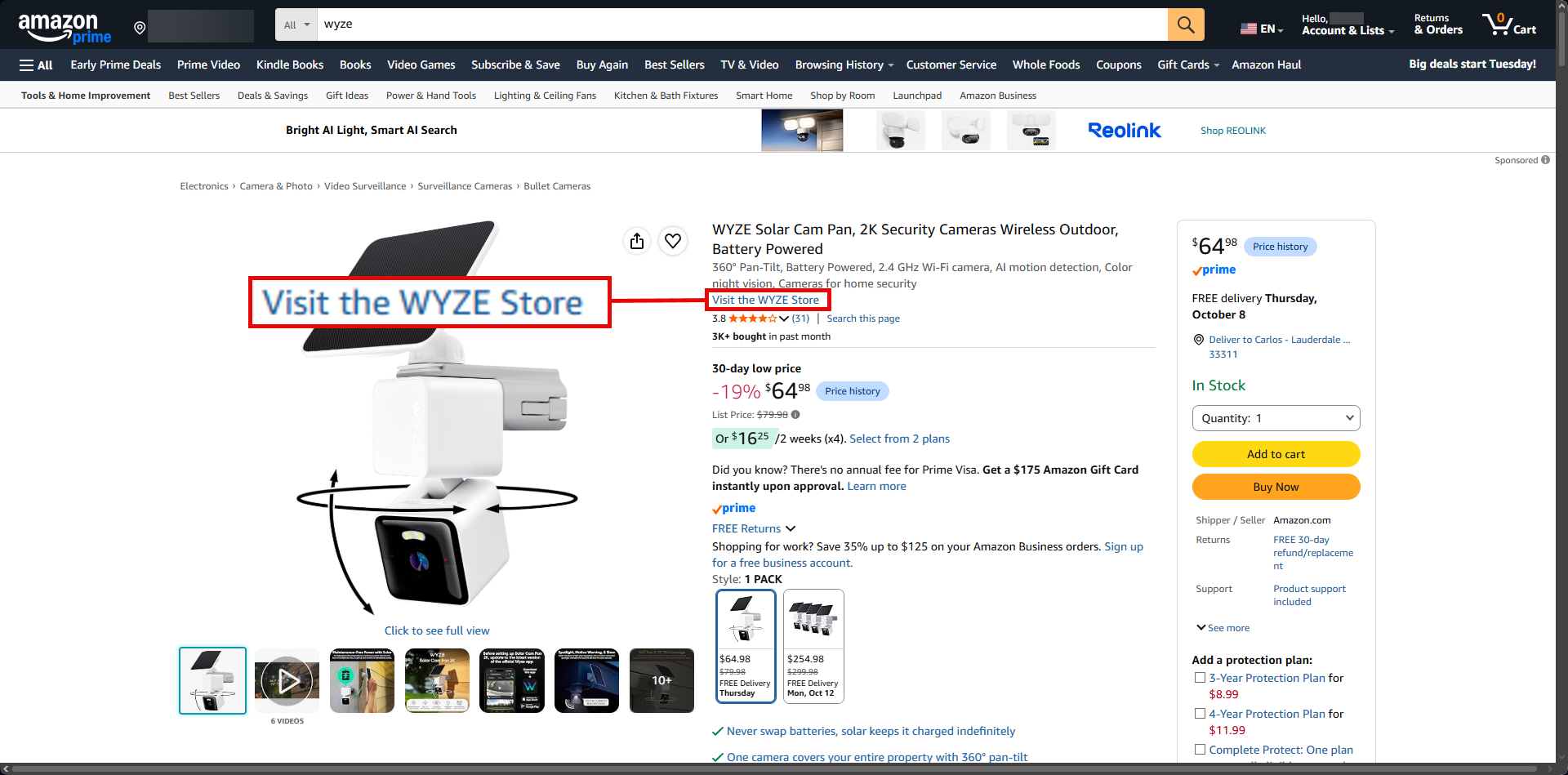
That tells you that the brand has a storefront or branded presence on Amazon.
However, that does not automatically mean every product on that page is being sold directly by Wyze.
You should still check the actual seller information.
Check “Sold By” and “Ships From”
Amazon may show several different combinations.
For example:
Sold by Amazon
A TP-Link product may show Amazon itself as the seller.
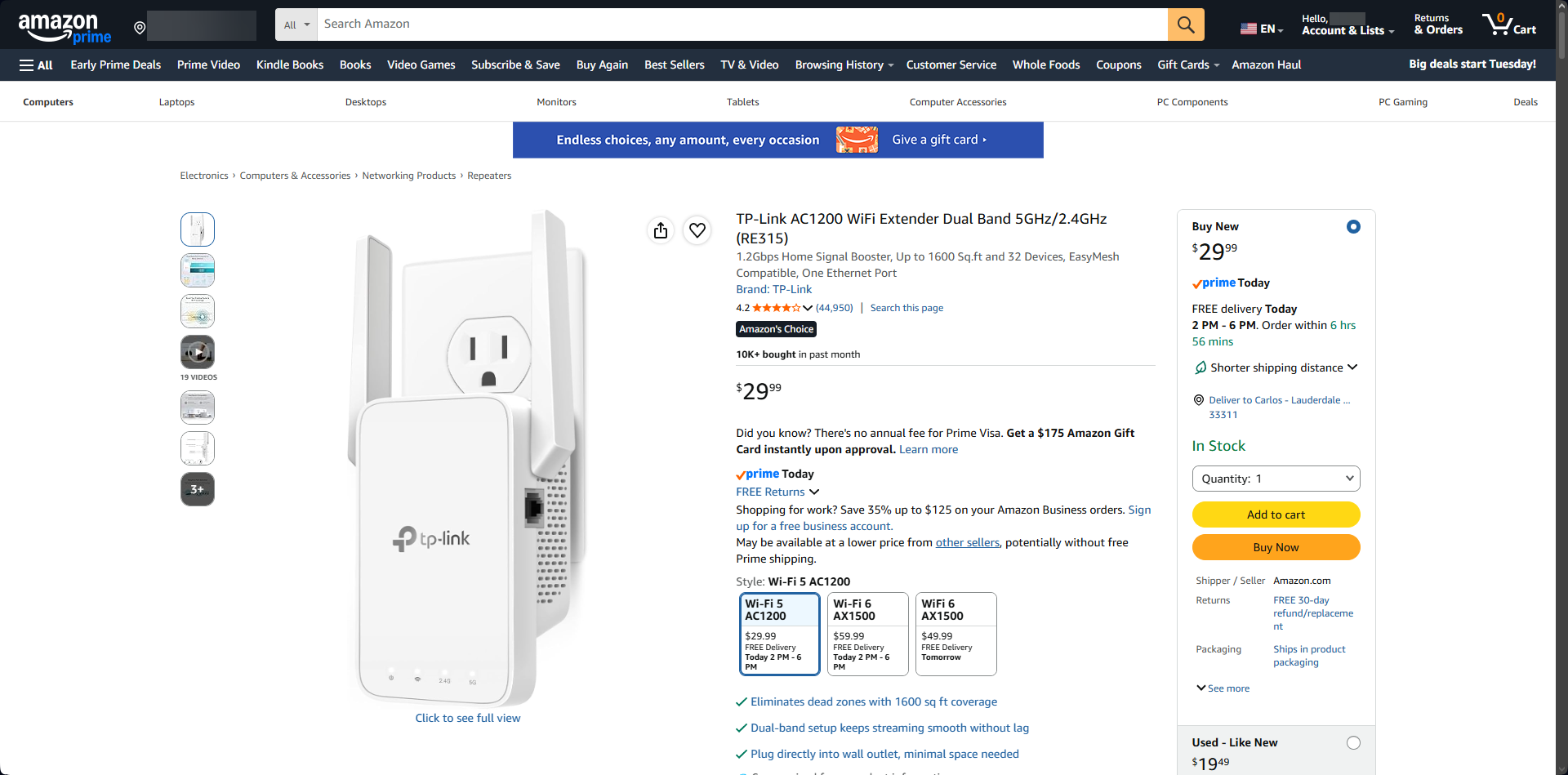
That means Amazon is directly selling the item.
You may also see used or alternate offers.
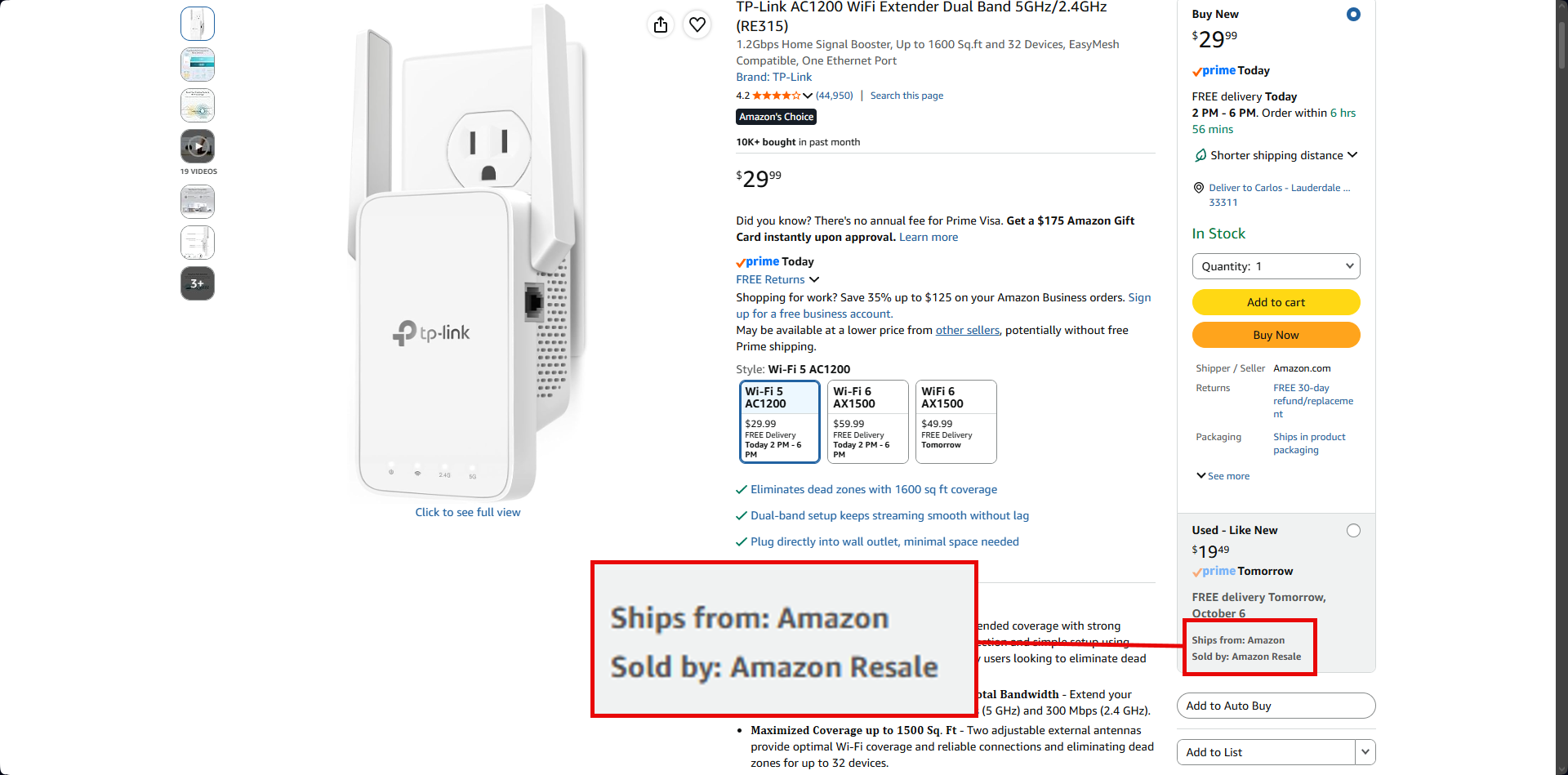
Sold by Someone Else
A product may be listed on Amazon but sold by a third-party business.
For example:
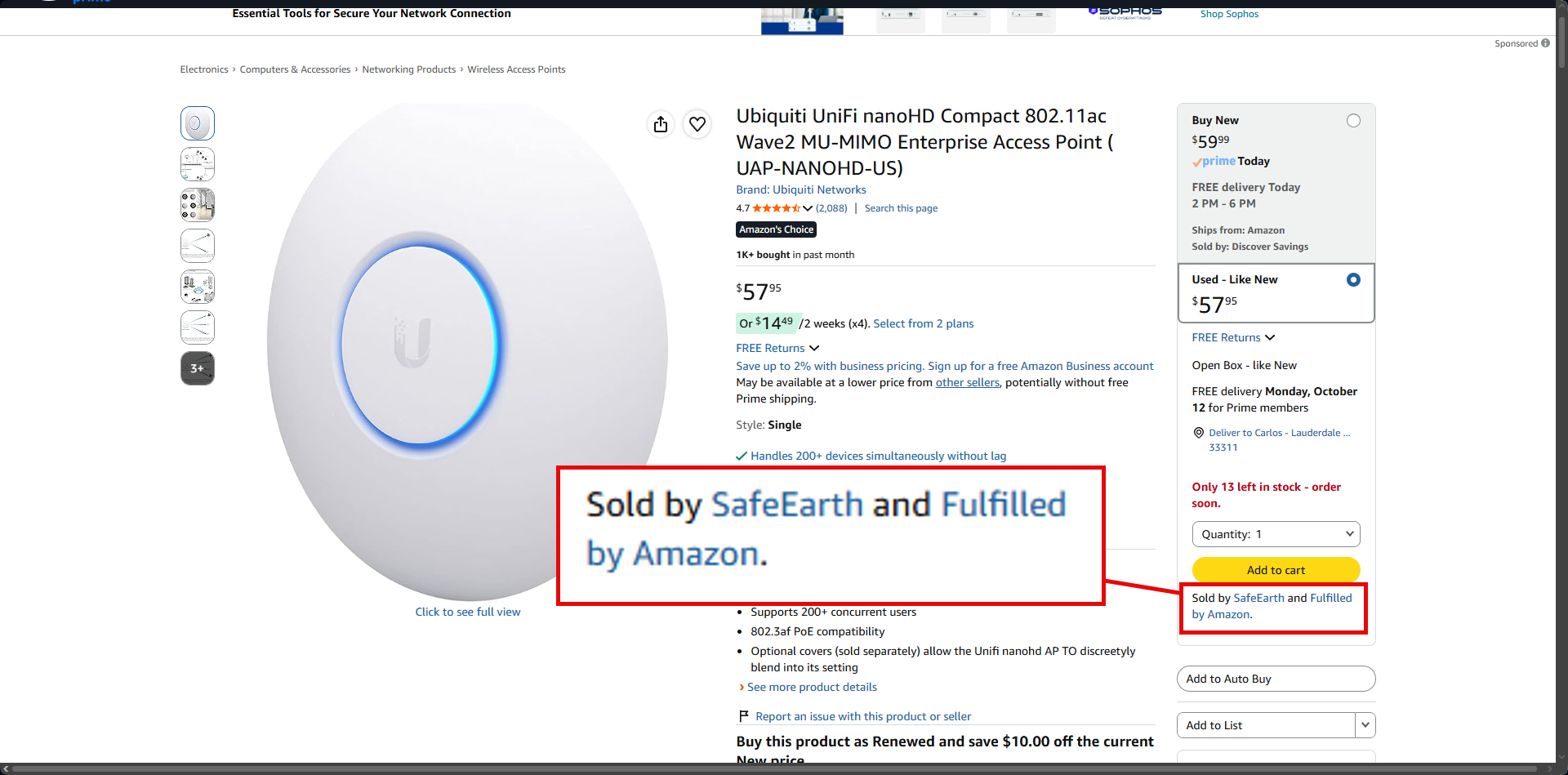
The item may still be shipped or fulfilled through Amazon, but the actual seller is someone else.
This distinction is important.
Ships From Amazon, Sold by Another Company
Another common arrangement is:
Ships from Amazon
Sold by [Third-Party Seller]
For example:
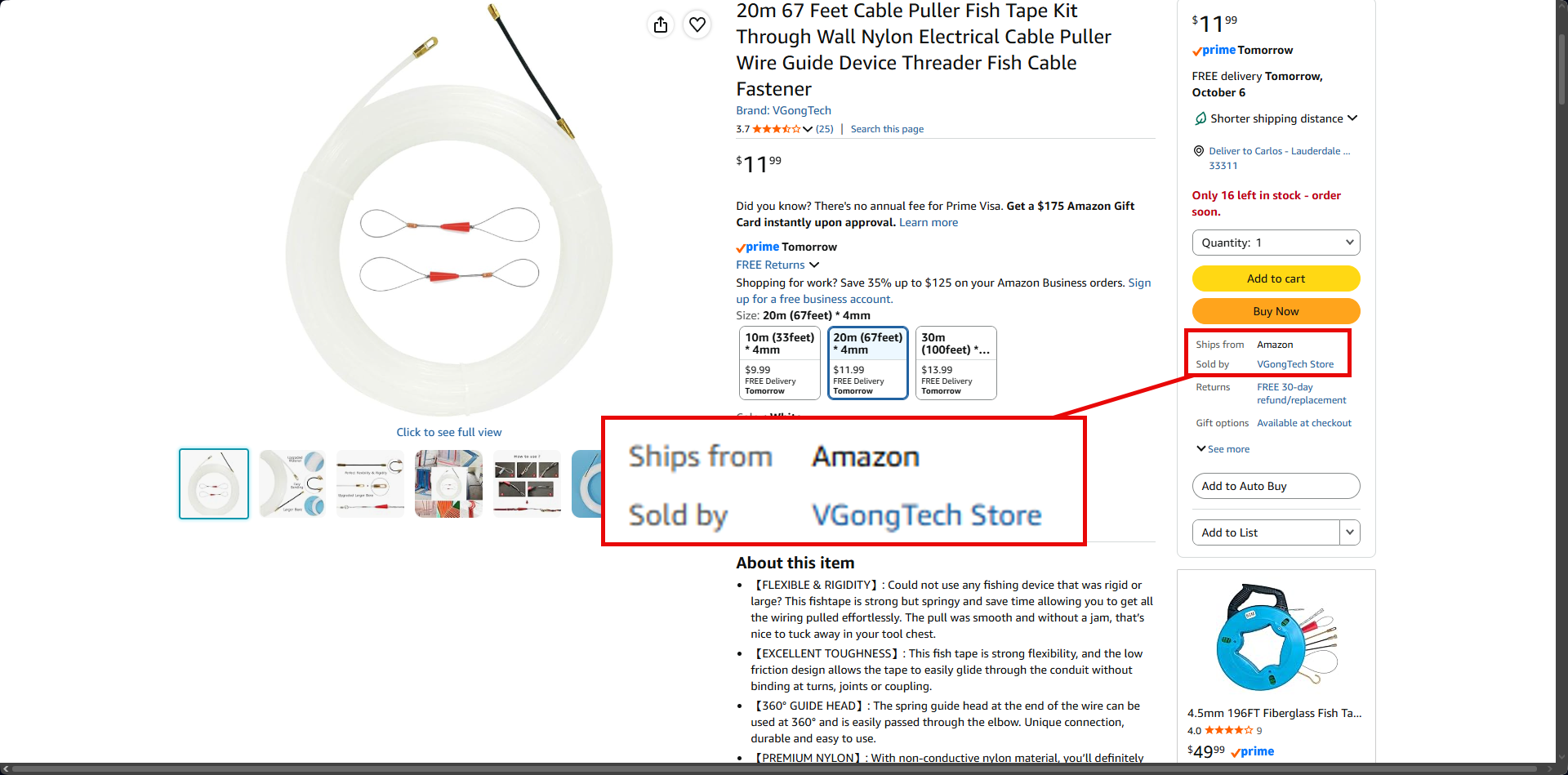
In this situation, Amazon may handle:
- storage;
- packing;
- shipping;
- delivery;
- some return processing.
But the inventory belongs to another seller.
The simple rule is:
Do not assume that because you are buying on Amazon, you are buying from Amazon.
Amazon Can Still Have Multiple Sellers
Amazon can still have multiple sellers offering the same item.
However, the current interface often emphasizes one Featured Offer, so alternate sellers may not be as obvious as they were in the past.
You may need to look for options such as:
- Other Sellers;
- New & Used;
- All Offers;
- Used options;
- lower-priced alternatives.
If you find one, this is a good place to compare:
- seller rating;
- condition;
- price;
- shipping method;
- return policy;
- estimated delivery.
eBay Works a Little Differently
eBay is more seller-focused.
When you search for an item, you may see a mixture of:
- individuals;
- small businesses;
- large businesses;
- authorized stores;
- refurbished sellers;
- used-equipment sellers.
Some brands and retailers also operate official stores.
For example:
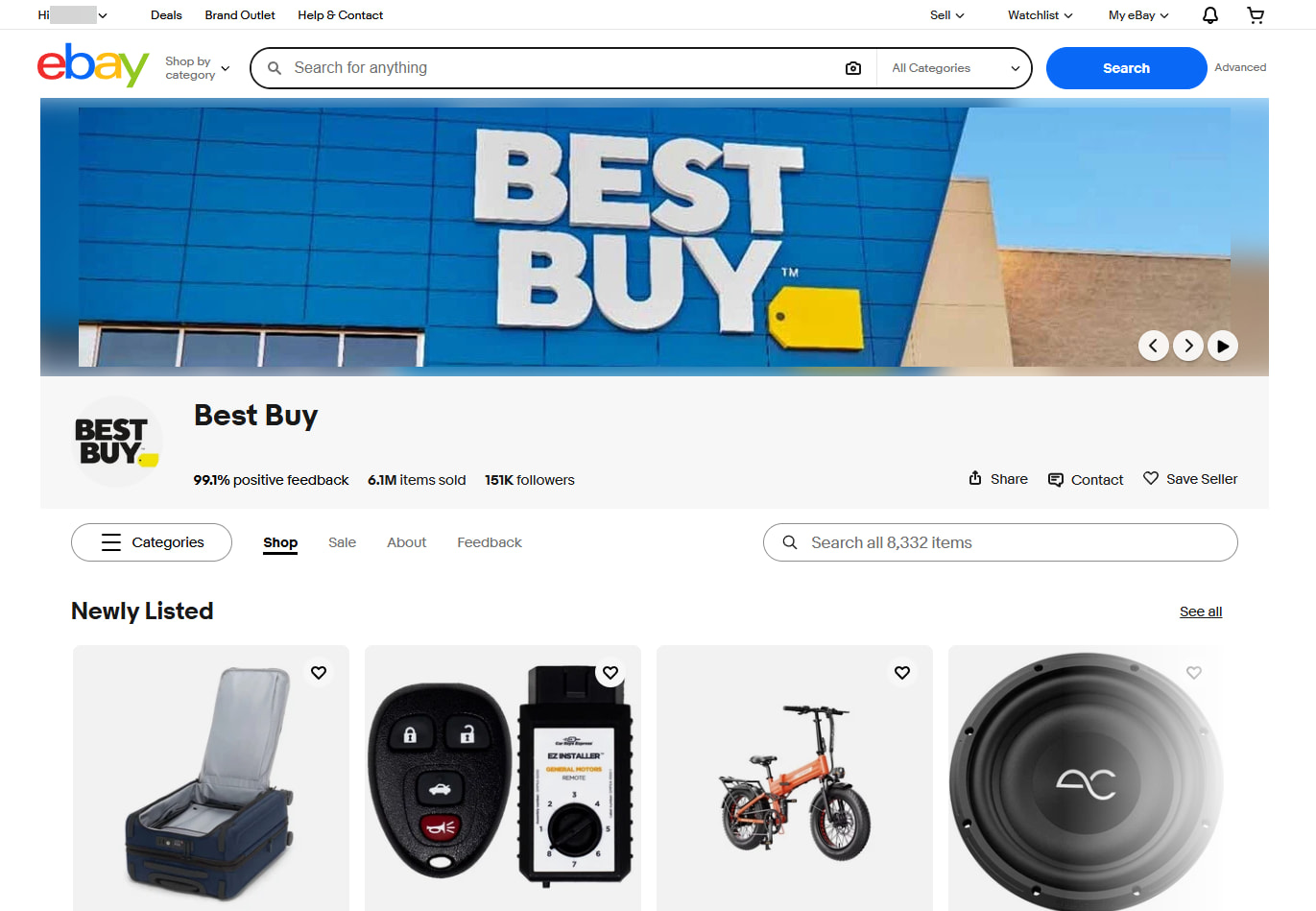
So an eBay listing is not automatically from an unknown individual.
However, many listings are.
That makes seller history even more important.
What Should You Check Before Buying?
Regardless of the platform, I recommend checking several things before purchasing.
Seller Rating
Look at the seller’s overall rating.
A higher percentage is generally better.
But percentage alone does not tell the whole story.
Rating vs Volume
Consider these two examples:
Seller A:
100% positive — 5 transactions
Seller B:
99.5% positive — 20,000 transactions
Seller A may be perfectly legitimate.
They may simply be new.
However, Seller B has a much larger history behind the rating.
That gives you more information to work with.
Rating tells you quality. Volume tells you how much evidence exists behind that rating.
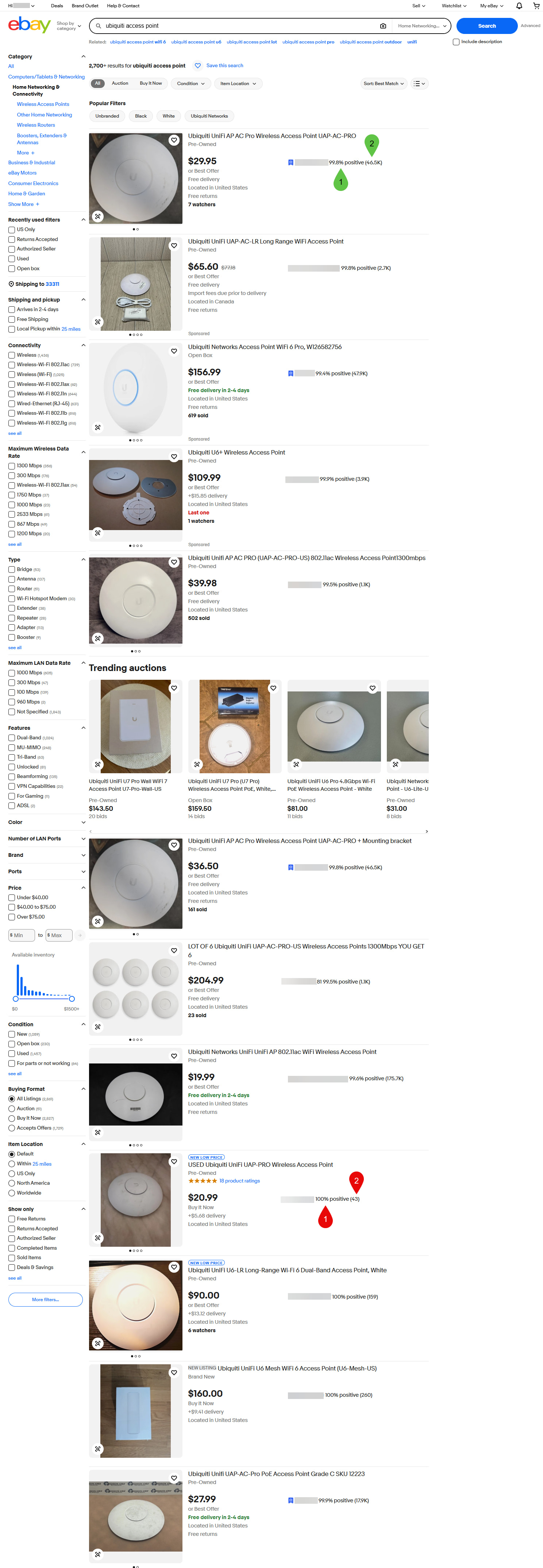
A seller with low activity is not automatically a scam.
It simply means there is more uncertainty.
Low history means higher uncertainty, not automatic fraud.
Check the Feedback Details
On eBay, the number shown beside a seller does not necessarily mean only items sold.
Feedback may come from activity as both:
- a buyer;
- a seller.
Check the actual feedback profile where possible.
Look for:
- positive percentage;
- number of transactions;
- recent feedback;
- complaints;
- seller-specific feedback;
- how long the account has existed.
Read the negative and neutral reviews.
One bad review among thousands may not matter much.
Several recent complaints describing the same issue may matter a lot.
Check How Long the Seller Has Been Around
Account age is another useful factor.
A seller that has been active for several years with thousands of transactions gives you more history to evaluate.
A brand-new seller with very low activity may still be legitimate.
You simply have less evidence.
This does not mean you should never buy from new sellers.
Sometimes the potential gain makes the risk worthwhile.
Sometimes Taking the Risk Makes Sense
I have taken chances on lower-history sellers before.
One example was an OnlyKey security key that I purchased for approximately USD $20.
Its normal value was closer to USD $80.
At that price, the potential gain was much greater than the possible loss.
If it turned out badly, the risk was around $20.
That is very different from taking the same chance on:
- a $500 laptop;
- a $1,000 phone;
- a $2,000 piece of equipment.
The principle is:
Consider both the likelihood of loss and the size of the possible loss.
A small calculated risk may make sense.
A large one may not.
Condition Matters
Do not only look at the title.
Check the actual condition.
Terms may include:
- New;
- Used;
- Used - Like New;
- Open Box;
- Renewed;
- Refurbished;
- For Parts;
- Parts Only.
These are not all the same.
A product marked “Used - Like New” may be fine.
A product marked “For Parts” may not work at all.
Always read the condition description.
Price Is Not the Only Cost
The cheapest listing is not always the cheapest purchase.
A lower-priced item may come with:
- higher shipping;
- weaker return options;
- longer delivery times;
- higher seller risk;
- lower warranty support;
- greater difficulty if something goes wrong.
The cheapest listing is not always the cheapest purchase once freight, returns, delays, and risk are considered.
Jamaican Buyers: Check the Weight
This is especially important for persons in Jamaica who use freight forwarders.
An item may look:
- small;
- light;
- inexpensive.
But that does not mean it will be cheap to ship.
Before buying, check:
- item weight;
- shipping weight;
- package dimensions;
- volumetric or dimensional weight;
- whether the item will travel by air or sea.
A heavy item can become very expensive through air freight.
A bulky item may also be charged based on dimensional weight even if it does not weigh very much.
Air Freight vs Ocean Freight
If the item is:
- small;
- light;
- urgently needed;
air freight may make sense.
If the item is:
- heavy;
- bulky;
- not urgent;
ocean freight may be much cheaper.
The purchase price may look excellent online, but freight can completely change the final cost.
For Jamaican buyers, the real cost may include:
- item price;
- US domestic shipping;
- sales tax;
- freight-forwarder charges;
- air or sea freight;
- dimensional-weight charges;
- customs charges;
- local delivery or pickup.
So always try to calculate the landed cost, not just the website price.
Returns Matter Too
Return policies should also influence the decision.
Ask:
- Who handles the return?
- Does the seller accept returns?
- Does Amazon or eBay provide protection?
- Will you have to pay return shipping?
- Can your freight forwarder return the item?
- Is return shipping from Jamaica practical?
A $20 savings may not be worth much if returning the item costs $50.
Final Checklist
Before buying online, check:
- Who is actually selling the item?
- Who is shipping it?
- What is the seller rating?
- How many transactions or reviews support that rating?
- How old is the seller account?
- What do the recent negative reviews say?
- What condition is the item in?
- What is the return policy?
- Is there another seller offering the same item?
- What is the item weight?
- What is the package size?
- Will air or ocean freight make more sense?
- What is the likely landed cost?
Final Point
Online platforms make buying easier.
They do not remove risk.
The platform may provide:
- payment processing;
- buyer protection;
- shipping;
- dispute resolution;
- fulfillment.
But the actual transaction may still depend heavily on the seller.
The platform gives you the marketplace. The seller gives you the transaction. Check both.
And remember:
A high rating is good. A high rating backed by a long history is better.
Low history means higher uncertainty, not automatic fraud.
The cheapest listing is not always the cheapest purchase once freight, returns, delays, and risk are considered.